
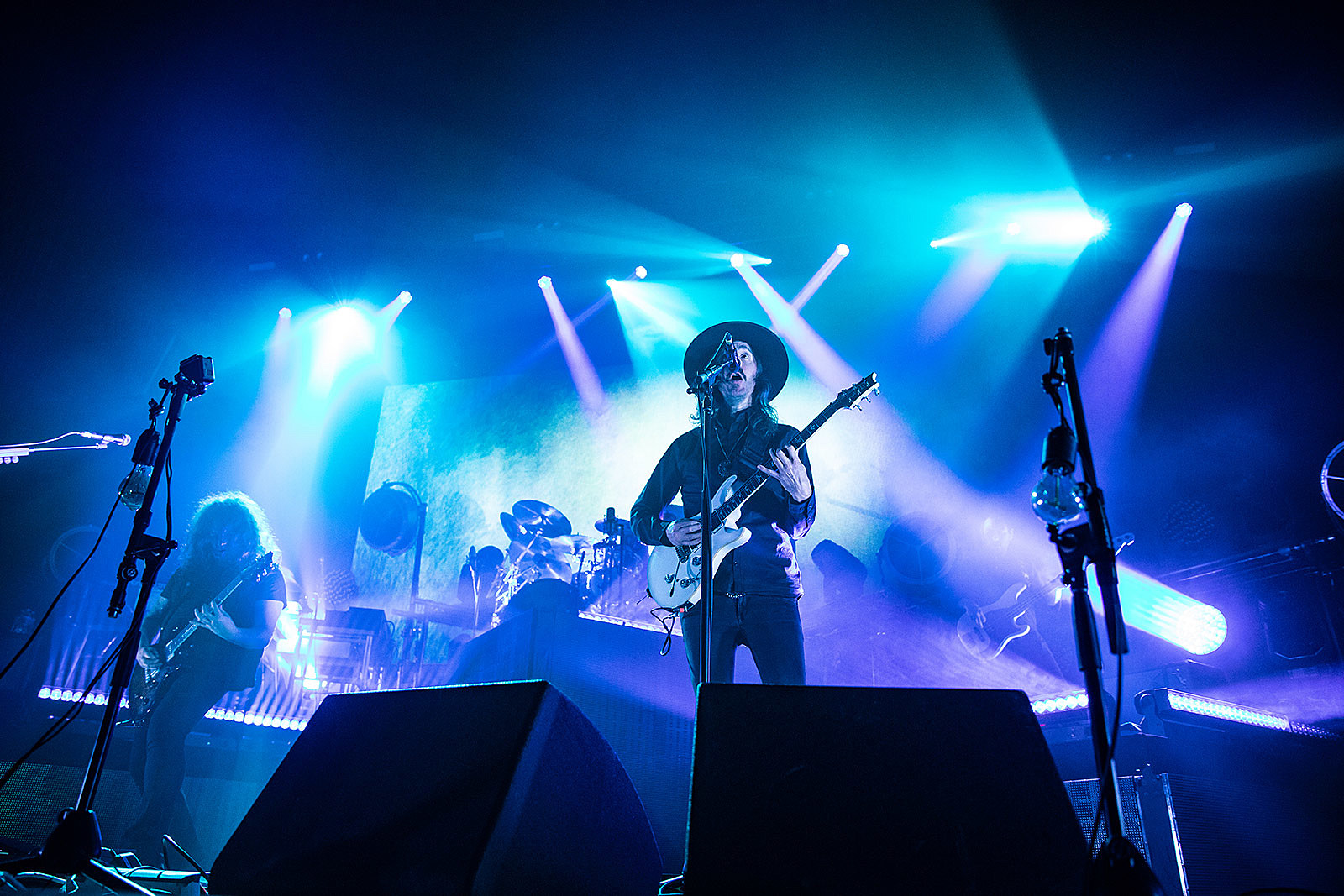
Opeth has always blended progressive rock and death metal, and over the years has mastered their own unique sound, in a way no other band has.
Early Years

Opeth originally began as a local band within Stockholm, Sweden’s death metal scene in 1990, before they branched out into progressive death metal. The band initially took a lot of influence from other Swedish death metal bands like Entombed, but also had a lot of issues in the beginning. The band was initially formed by David Isberg, but the lineup quickly changed following Isberg’s introduction of Mikael Åkerfeldt into the band.

Skipping over the many changes within the band, we’ll pick up back in 1992, when Isberg left the band due to creative differences. Åkerfeldt became the vocalist, and along with Anders Nordin and Peter Lindgren, spent the year working on new material. Despite the band’s roots in death metal, they experimented with sounds of acoustic guitars, and other non-death metal sounds.
In 1995, Opeth’s debut album Orchid was released, which took heavy inspiration from traditional death metal, but also incorporated acoustic guitars, clean vocals, and the piano. In the years following, they released the albums Morningrise and My Arms, Your Hearse in the years 1996 and 1998 respectively. Both albums continued to refine Opeth’s sound, while still having clear roots in traditional death metal.
Progressive Shift

In 1999, Opeth signed with a new label following their original label changing owners. They began to work on a new album, Still Life, which had many hurdles to both create and release. Delays in studio timing, lack of rehearsals, issues with getting artwork for the album, and problems with the distribution of the album caused many delays in releasing and creating the album. While it released first in 1999, it didn’t reach the United States until 2001.
However, it’s a great thing they overcame these hurdles, because Still Life leaned much more into the progressive death metal genre, and was Opeth’s first concept album. It tells the story of a character who is banished from their hometown, and comes back to it after many years. The album starts when he returns.

The band continued to refine and experiment with their sound, releasing their next album in 2001, Blackwater Park. It follows in the steps of Still Life, despite not being a concept album. It almost feels like a series of short stories in a bleak setting. It’s a lot more melancholic than Still Life, but feels like a more refined version of their sound from that album.

After touring for Blackwater Park, Jonas Renkse from the band Katatonia suggested for the band to create two albums, with one being a heavier album and one being a lighter album. This lead to the creation of both Deliverance and Damnation, releasing in 2002 and 2003 respectively, but being recorded in the same 7 weeks. Deliverance is a much heavier sound, but is a great showcase of how technically impressive Opeth is, and how dynamic their sound can be. Damnation on the other hand, is very soft, and very melancholic. If anything, I would argue Damnation is an amazing example for how Opeth can create the mood of an album so masterfully.
Modern Sound

Following Deliverance and Damnation, Opeth continued to refine and evolve their sound in Ghost Reveries and Watershed, but their modern sound really shows in their 2011 album Heritage. This album marked Opeth’s shift away from some elements of traditional death metal, having no harsh vocals for example. Despite some fans disapproving of this change, Opeth continued to branch into other influences rather than sticking fully to their roots in death metal.
Their later albums like Pale Communion in 2014, Sorceress in 2016, and In Cauda Verenum in 2019 continue in this direction. These albums put much heavier emphasis on the atmosphere and progression, making them arguably more complex in structure than their prior albums.
Opeth’s sound is emotional and complex, somehow being conceptually consistent between the genres they traverse. Their focus is on immersing the listener, and their modern sound is mostly focused on the mood and storytelling within the album.
I would add more about The Last Will and Testament, but I haven’t dived as deeply into the lyrics and technical elements of the album as much as I have for the others. But I will note that it is a concept album and has harsh vocals like their older albums. It is like a return to form, if that makes sense.
In summary, their sound is focused on:
- The blend between heavy, death metal riffs, and calm, acoustic instrumentals.
- Long, complex structures for songs, with transitions from progressive rock/metal.
- Experimentation in vocals, ambiance, and instrumentals.
- Immersion through mood and storytelling.